

Trauma Bonding Signs: Why It's So Hard to Leave a Toxic Partner
If you have ever found yourself sitting on the edge of your bed, heart racing, wondering how you got here, and more importantly, why you can’t seem to leave, please know that you are not alone. You might feel like you are losing your mind. You might feel weak, or perhaps you’ve been told that you’re "addicted to the drama."
At Blooming Lilies, we want to start by telling you the truth:
You aren't weak, and you aren't "crazy."
What you are experiencing is a powerful, documented psychological phenomenon known as trauma bonding.
Leaving a toxic relationship isn't just a matter of packing a bag; it is an uphill battle against your own brain chemistry and a cycle designed to keep you trapped. Understanding the trauma bonding signs is the first step toward reclaiming your identity and your life.
What Exactly is Trauma Bonding?
Trauma bonding is an intense emotional attachment that develops between an abused person and their abuser. It doesn't happen overnight. It is forged in a furnace of high-intensity emotions, where periods of extreme affection are punctuated by moments of fear, betrayal, or mistreatment.
This bond is so strong because it’s rooted in your survival instincts. When someone hurts you and then becomes the one to comfort you, your brain creates a deep, confusing link between that person and your sense of safety. It’s a "toxic cycle" that mirrors the mechanics of addiction.
Recognizing the Trauma Bonding Signs
Because trauma bonds are built on manipulation, they can be incredibly difficult to see when you are in the middle of them. The abuser often uses "gaslighting" to make you doubt your own reality. Here are the most common trauma bonding signs to look for:
- The "Love Bombing" Phase: In the beginning, they showered you with excessive affection, gifts, and promises of a future together. This creates a baseline of "perfection" that you will spend the rest of the relationship trying to get back to.
- Intermittent Reinforcement: This is the "hook." They aren't mean all the time. They are just mean enough to keep you off balance, and then suddenly kind enough to give you hope. This inconsistency is what keeps you stuck.
- Walking on Eggshells: You find yourself constantly monitoring their mood. You change your behavior, your clothes, or your words just to avoid a blow-up. This state of hypervigilance is exhausting and a clear sign of a trauma bond.
- Covering Up the Abuse: You find yourself making excuses for them to your friends and family. You might say, "They’ve just had a hard week," or "You don't see the side of them that I see."
- Loss of Self: You look in the mirror and don't recognize the person looking back. Your hobbies, interests, and even your core values have been replaced by the needs and demands of your partner.
- Difficulty Leaving Despite the Harm: You know the relationship is toxic. You might even have a list of reasons why you should go, yet you feel a physical and emotional "pull" to stay or return every time you try to walk away.
If these signs feel familiar, it’s important to acknowledge them without judgment. You can check your current situation more deeply with our Domestic Violence Assessment to help gain clarity.
The Science of the "Stuck": Intermittent Reinforcement
Why is it so hard to leave? Why do you stay for the "good times" even when the "bad times" are devastating? The answer lies in intermittent reinforcement.
Think of a slot machine. If a person pulls the lever and never wins, they stop playing. But if they win once in every fifty tries, they keep pulling that lever because the possibility of a win, the "dopamine hit", is addictive.
In a toxic relationship, the "good times" are the jackpot. When your partner finally apologizes, shows affection, or acts like the person you first fell in love with, your brain releases a flood of dopamine and oxytocin. This creates a powerful relief that temporarily washes away the pain of the abuse.
This cycle makes the bond feel "deeper" than a normal relationship because it is forged in crisis. You aren't just in love; your nervous system has become dependent on the relief they provide after the pain they caused. This is the toxic cycle that makes leaving feel like going through drug withdrawal.

The Emotional Toll: Shame and Isolation
One of the most effective tools a toxic partner uses to maintain a trauma bond is isolation. By slowly convincing you that your friends are "jealous" or your family "doesn't understand," they become your only source of validation.
This isolation breeds shame. You might feel embarrassed that you "let" this happen, or ashamed that you haven't left yet. This shame keeps you silent, and silence keeps the bond strong. At Blooming Lilies, we want you to know there is no shame in survival. The tactics used against you were designed to be confusing and addictive.
If you are feeling isolated and don't know who to turn to, please visit our Crisis Lines page for immediate, confidential support.
Breaking the Bond: How to Start Healing
Breaking a trauma bond is not a single event; it is a process of "detoxing" your nervous system. It requires patience, support, and a commitment to your own reality.
1. Education is Power
Understanding the psychology behind your feelings helps remove the self-blame. When you realize that your feelings are a biological response to trauma rather than a "weakness" of character, you can begin to look at the relationship objectively. We recommend exploring our resources on Nervous System Healing to understand how to calm your body’s stress response.
2. Go "No Contact" or "Low Contact"
The bond is reinforced every time you interact with the abuser. If it is safe to do so, cutting off communication allows your brain chemistry to stabilize. If you have children or legal ties that make "no contact" impossible, "low contact" or "Grey Rocking" (becoming as uninteresting as a grey rock) can help protect your energy.
3. Document the Reality
Because trauma bonding involves a lot of "forgetting" the bad times (a survival mechanism called euphoric recall), keeping a record is vital. When you are tempted to go back, read the reality of what happened.
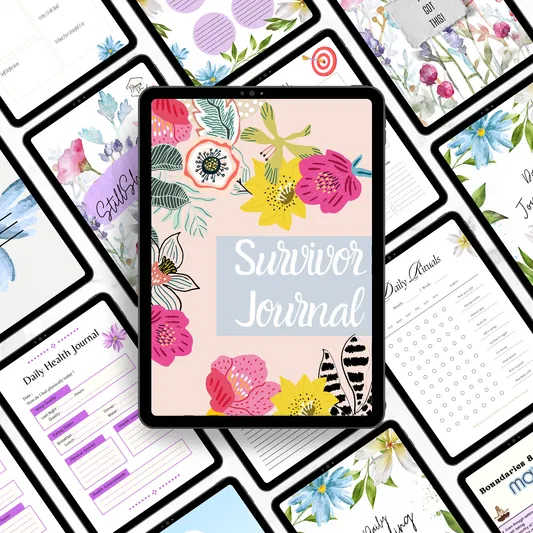
At Blooming Lilies, we have created the Survivor Journal, specifically designed for women navigating this journey. Journaling helps you bridge the gap between your heart and your head. It provides a safe space to track patterns, process emotions, and remind yourself of the truth when the trauma bond tries to pull you back into the fog. You can find our collection of supportive tools in our Journal Collection.
4. Build Your Support System
You cannot do this alone. Whether it’s a therapist trained in narcissistic abuse, a support group, or a trusted friend, you need people who can hold the "truth" for you when you feel too weak to hold it yourself.
You Deserve a Life of Peace
The journey of leaving a trauma-bonded relationship is one of the hardest things you will ever do, but it is also the most rewarding. You are reclaiming your right to breathe, to think for yourself, and to live without fear.
Remember, healing isn't linear. There will be days when you miss them, and that is okay. It’s not a sign that you should go back; it’s just a sign that the bond was real. Be gentle with yourself. You are a survivor, and your resilience is your greatest strength.

Take the Next Step
If you are ready to begin the process of untangling your life from a toxic cycle, we are here to support you. Whether you need help with Financial Planning to gain independence, or you are looking for Housing Resources to find a safe place to land, Blooming Lilies provides the tools you need to move from crisis to flourishing.
You have the power to break the cycle. Start today by exploring our Holistic Mental Wellness resources and remind yourself every single day: You are worthy of a love that doesn't hurt.